
Live oaks, Spanish moss, and dense maritime forest create the picturesque character that draws homeowners to James Island and Johns Island. From Riverland Terrace, Bayview, and Stiles Point down through Maybank Highway to Headquarters Plantation and Edenvale, mature canopies provide cooling shade and historic Southern beauty. However, those expansive branches also create a demanding microclimate directly above your roof shingles.
While many Lowcountry homeowners monitor coastal storms, daily canopy exposure often causes steady, hidden roofing wear. Heavy shade restricts sunlight, trap moisture against shingle surfaces, and encourages thick organic growth. Meanwhile, falling leaves, twigs, Spanish moss clumps, and oak catkins fill roof valleys and gutter channels. Understanding how maritime tree cover affects shingle performance helps you prevent small moisture issues from developing into costly structural repairs.
Why Shaded Roofs Deteriorate Differently in the Lowcountry
Coastal South Carolina combines high summer humidity, frequent afternoon downpours, and warm temperatures for most of the year. When a roof receives open sun exposure, morning dew and afternoon rainwater evaporate relatively quickly. On heavily wooded parcels across James Island and Johns Island, dense live oak and laurel oak branches block airflow and direct sunlight.
Without adequate drying cycles, asphalt shingles remain damp for hours or even days after a rainfall. This perpetual moisture environment causes three specific problems:
- Granule Loosening: Constant moisture softens the asphalt binding layer beneath ceramic granules. As granules loosen, shingles lose their protective barrier against UV radiation and physical abrasion.
- Organic Colonization: Damp organic matter creates an ideal breeding ground for moss, lichens, and cyanobacteria (Gloeocapsa magma).
- Decking Moisture Retention: Extended surface dampness can penetrate around fastener penetrations and underlayment overlaps, slowly softening wooden roof decking.
If your home sits beneath mature trees, paying close attention to targeted roof repair when early surface symptoms appear can protect the integrity of your entire roofing system.
The Threat of Spanish Moss, Green Moss, and Algae
Many residents assume the dark discoloration on coastal roofs is simply road soot or harmless dirt. In reality, multiple biological organisms thrive in shaded Lowcountry settings:
Dark Algae Streaks (Gloeocapsa Magma)
Those dark black streaks spreading across north-facing roof slopes are colonies of airborne cyanobacteria. The bacteria feed on the calcium carbonate fillers used in standard asphalt shingles. While dark algae streaks are primarily an aesthetic issue initially, severe accumulations absorb excess heat and break down shingle binders over time.
True Green Moss
Unlike algae, true moss has shallow root-like structures called rhizoids. Moss anchors into the spaces between shingles, lifting edges upward. Once shingles lift, wind-driven rains from coastal squalls push water underneath the protective layers. Moss also acts like a sponge, holding standing water directly against shingle surfaces through every humid evening.
Spanish Moss Fall and Clumping
Spanish moss is an epiphyte hanging from oak limbs rather than a parasitic roof growth. However, when storm gusts drop heavy moss clumps onto roof slopes, they catch in valleys, chimney crickets, and behind plumbing vent pipes. Left in place, these wet clumps decay into acidic organic compost that accelerates shingle degradation.
Valley Dams and Gutter Blockages
Live oaks shed old leaves continuously in the spring, followed by dense pollinating catkins, small acorns in autumn, and dead twigs year-round. These small debris particles wash down roof planes and lodge into roof valleys.
When organic debris accumulates in a roof valley, it creates a physical dam. Rather than shedding swiftly down the metal or shingle channel into gutters, water backs up laterally. Water can work beneath shingles, find underlayment seams, and drip onto attic insulation.
Furthermore, packed debris in gutters prevents proper drainage along eaves. Overflowing gutters soak fascia boards, rot soffits, and allow water to wick backward under lower drip edges. Homeowners in wooded neighborhoods benefit significantly from regular perimeter evaluations and proactive residential roofing maintenance to keep drainage pathways clear.
Tree Limb Clearance and Physical Shingle Scuffing
During typical summer thunderstorms and Atlantic wind events, heavy tree limbs sway violently. Overhanging branches act like coarse sandpaper against shingle granules:
- Mechanical Abrasion: Repeated branch contact removes ceramic mineral surfacing, exposing bare asphalt to sunlight.
- Puncture Hazards: Dead branches breaking off during high winds can easily puncture decking, crack shingles, or dislodge ridge caps.
- Critter Access: Overhanging limbs within six to eight feet of your roofline provide an effortless highway for squirrels, raccoons, and rodents seeking warm attic shelter.
Trimming branches back at least six to ten feet from the roofline provides necessary clearance, lets sunlight dry roof surfaces, and preserves mature trees without sacrificing building safety.
Safe Maintenance: What You Should Never Do
When homeowners notice moss or dark stains spreading across their roof, good intentions often lead to destructive cleaning methods.
Never use a pressure washer on asphalt shingles. High-pressure water strips away the protective mineral granules, shortening shingle life, and it may affect warranty coverage; check your warranty's exclusions.
Additionally, avoid scraping moss with metal tools or wire brushes, which tears shingle mats. Professional roof cleaning utilizes gentle, manufacturer-approved chemical soft-washing solutions that neutralize biological spores down to their roots without physical damage.
For persistent issues, specialized zinc or copper strips installed along roof ridges can release microscopic ions during rainstorms, naturally inhibiting future moss and algae development across downstream slopes.
Inspecting Canopy Impact Across James Island and Johns Island
Tree cover makes it difficult to see early wear patterns from ground level. A thorough attic and roofline assessment identifies subtle water intrusion long before ceilings show yellow stains.
At Revive Roofing & Exteriors, we examine roof integrity across the Lowcountry, from our central hub serving the historic areas of Charleston out to rural Johns Island homesteads and James Island neighborhoods. Our comprehensive 27-point inspection checks valley flashings, plumbing boot collars, attic decking moisture, shingle adhesion, and gutter drainage. You can also read what neighbors say in our Google reviews regarding our honest evaluations and careful craftsmanship.
Frequently Asked Questions
Does tree shade reduce the lifespan of asphalt shingles?
Yes, heavy shade keeps shingles damp, encourages moss growth that lifts shingle edges, and allows organic debris to trap moisture against decking.
Can I remove roof moss with a pressure washer?
No, pressure washing can strip protective granules and damage asphalt shingles; follow the manufacturer's cleaning instructions and check the warranty's exclusions.
How far back should tree limbs be trimmed from my roof?
Branches should be trimmed back at least six to ten feet from roof planes to ensure sunlight exposure, prevent wind abrasion, and deter pests.
Protect your wooded island home with a professional assessment from local specialists. Revive Roofing & Exteriors holds South Carolina license RBS 66578, providing detailed evaluations, clear written recommendations, and dependable three-warranty protection. Schedule your free 27-point roof inspection today or call our team directly at (843) 823-7777.
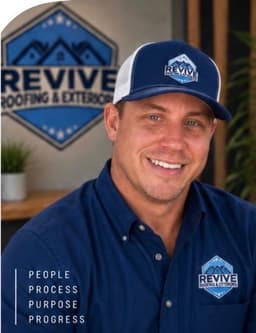
Blake Grissom
Founder & CEO, Revive Roofing & Exteriors · Co-Founder & CSO, BuilderLync • #1 Roofing Sales Rep in the Nation (2025) • Double Golden Door Award • Flagship Capital City Roofing Licensee
Blake Grissom is the Founder and CEO of Revive Roofing & Exteriors and the Co-Founder and Chief Sales Officer (CSO) of BuilderLync, bringing over 18 years of hands-on roofing and exterior restoration expertise to the Carolinas. In 2025, Blake ranked as the #1 roofing sales representative in the nation with over $7 million in personal sales and earned the Double Golden Door Award. Headquartered in Charleston, South Carolina and serving the Greenville Upstate, Revive operates as the flagship partner on the Capital City Roofing Licensing Platform. Under his leadership, Revive is the only Charleston roofing contractor offering three layers of warranty protection anchored by a $250,000 Workmanship Guarantee across residential, multi-family, and commercial roofing.