

Protecting Your Coastal Investment: A Guide to Residential Roofing in Charleston
Charleston homeowners love this city for its charm, its history, and its proximity to the coast. But that same coastal setting creates a relentless set of challenges for the roof over your head. Between hurricane-force winds, salt air corrosion, punishing UV exposure, and humidity levels that hover around 70 to 80 percent for much of the year, a roof in the Lowcountry works harder than almost anywhere else in the country.
Choosing the right roofing system is not just a cosmetic decision. It is one of the most consequential financial and structural decisions you will make as a homeowner. The wrong material, the wrong installation method, or the wrong contractor can cost you tens of thousands of dollars in premature failure, water damage, and lost energy efficiency.
This guide walks you through what Charleston homeowners need to know about residential roofing materials, wind ratings, impact resistance, and moisture management so you can make an informed choice that protects your home for decades.
Understanding the Lowcountry Climate and What It Does to Roofs
Charleston sits in a subtropical climate zone where the combination of heat, humidity, salt air, and severe weather creates a uniquely hostile environment for roofing materials. Understanding these forces is the first step toward making a smart roofing decision.
Heat and UV Exposure
From May through September, Charleston sees daily high temperatures regularly exceeding 90 degrees Fahrenheit. Your roof surface can reach 150 to 170 degrees on a sunny summer afternoon. This intense heat causes thermal expansion and contraction cycles that fatigue roofing materials over time. Asphalt shingles lose their volatile compounds faster, metal panels flex at their seams, and sealants dry out and crack sooner than they would in a milder climate.
Humidity and Moisture
The Lowcountry is defined by its relationship with water. Average relative humidity hovers between 70 and 80 percent year-round. Morning dew forms on roof surfaces almost every day during warmer months. This persistent moisture creates ideal conditions for algae growth, moss accumulation, and the slow degradation of organic roofing components. If your attic ventilation is not properly designed, condensation can form on the underside of the roof deck, leading to rot and mold that you may not notice until the damage is significant.
Salt Air Corrosion
Living near the coast means dealing with airborne salt particles that settle on every exterior surface. Homes within a few miles of the harbor, the beaches, or the tidal creeks are exposed to salt concentrations that accelerate the corrosion of metal fasteners, flashing, drip edges, and any exposed metal roofing components. Standard galvanized steel can begin showing rust within just a few years in this environment.
Hurricane and Severe Storm Exposure
Charleston is no stranger to hurricanes. From Hugo in 1989 to Matthew in 2016 and Dorian in 2019, the city has experienced the destructive power of tropical systems firsthand. Even tropical storms and strong summer thunderstorms can generate winds above 70 mph and dump several inches of rain in under an hour. Your roof must be engineered to handle wind uplift, wind-driven rain penetration, and potential impact from airborne debris.
Residential Roofing Materials That Perform in Coastal Environments
Not all roofing materials are created equal, and the differences become even more pronounced in a coastal climate. Here is a breakdown of the most common residential roofing options and how they hold up in Charleston.
Architectural Asphalt Shingles
Architectural shingles remain the most popular residential roofing choice in the Charleston area, and for good reason. Modern architectural shingles are significantly more durable than the three-tab shingles of previous decades. They offer a dimensional look, come in a wide range of colors, and are available with wind ratings up to 130 mph.
For Charleston, look for shingles with algae-resistant granules, which help prevent the dark streaking caused by Gloeocapsa magma, a type of blue-green algae that thrives in our humid climate. Choose shingles rated for high wind zones, and make sure your installer uses the enhanced nailing pattern recommended for wind-prone areas, which typically means six nails per shingle instead of four.
Expected lifespan in Charleston: 20 to 30 years with proper installation and ventilation.
Metal Roofing
Metal roofing has surged in popularity throughout the Lowcountry, and for excellent reasons. Standing seam metal roofs offer superior wind resistance, often rated for winds exceeding 140 mph. They shed water efficiently, resist algae growth, and reflect solar heat, which can reduce cooling costs by 10 to 25 percent.
The key consideration for metal roofing in Charleston is corrosion resistance. Aluminum and zinc are naturally corrosion-resistant and perform well in salt air environments. If you choose steel, make sure it has a Galvalume or equivalent coating rated for coastal exposure. Avoid untreated galvanized steel within several miles of the coast. Also pay attention to the fastener system: concealed fastener systems like standing seam are far superior to exposed fastener systems in a coastal environment because they eliminate the risk of fastener-point corrosion and leaks.
Expected lifespan in Charleston: 40 to 70 years depending on material and coating.
Synthetic Slate and Shake
Synthetic roofing products made from engineered polymers are designed to replicate the appearance of natural slate or cedar shake without the weight or maintenance concerns. Many of these products carry Class 4 impact ratings and wind ratings exceeding 110 mph. They resist algae, do not absorb moisture, and weigh significantly less than natural stone.
These products work well in Charleston, particularly on historic-style homes where homeowners want a traditional look with modern performance. Be sure to choose a product with a strong UV stabilizer, as intense Lowcountry sun can cause color fading in lower-quality synthetic products.
Expected lifespan in Charleston: 30 to 50 years.
Natural Slate
Natural slate is the gold standard of roofing materials in terms of longevity and aesthetic beauty. It is fire-resistant, wind-resistant, and immune to rot and insect damage. However, it is also the heaviest and most expensive roofing option. Your home's structure must be engineered to support the weight, and installation requires specialized skill that not all contractors possess.
For Charleston's historic district, where architectural guidelines may require materials consistent with the home's period, slate remains an excellent choice. Just be aware that even with slate, the metal flashing and fasteners still require corrosion-resistant materials.
Expected lifespan in Charleston: 75 to 100+ years.
Wind Ratings: What the Numbers Mean and Why They Matter
Roofing wind ratings can be confusing because different testing standards measure different things. Here is what you need to know as a Charleston homeowner.
ASTM D3161 and ASTM D7158
These are the two primary standards used to rate shingle wind resistance. ASTM D3161 classifies shingles as Class A (60 mph), Class D (90 mph), or Class F (110 mph). The newer ASTM D7158 uses Class D (90 mph), Class G (120 mph), and Class H (150 mph). When shopping for shingles, look for the highest rating you can get within your budget.
UL 580 for Metal and Other Systems
UL 580 tests uplift resistance for roof assemblies, not just the surface material. Ratings run from UL 15 through UL 90 and beyond, with the number representing the negative pressure in pounds per square foot the assembly can withstand. For Charleston, a UL 90 rating is considered the baseline for commercial-grade performance.
South Carolina Building Code Requirements
South Carolina has adopted versions of the International Building Code that specify minimum wind design criteria based on location. Charleston County falls in a region that requires roofing systems to meet elevated wind resistance standards. Your contractor should be familiar with the specific requirements for your address based on its wind speed zone and exposure category.
The bottom line: in Charleston, do not settle for minimum-rated products. The incremental cost of a higher wind-rated system is small compared to the cost of a roof failure during a tropical storm.
Impact Resistance: Protecting Against Hail and Debris
While Charleston is not in the heart of hail country, severe thunderstorms and tropical systems can generate hail and send tree limbs, building materials, and other debris across your roof at high speed. Impact resistance is worth considering, especially because many insurance companies offer premium discounts for impact-resistant roofing.
Understanding the UL 2218 Rating System
The UL 2218 standard rates impact resistance on a scale of Class 1 through Class 4, with Class 4 being the most resistant. Testing involves dropping a two-inch steel ball from 20 feet onto the roofing material. Class 4 materials show no cracking or fracturing after this test.
Impact-Resistant Options for Charleston
Architectural shingles with SBS (Styrene-Butadiene-Styrene) modified asphalt are more flexible and absorb impact energy better than standard shingles. Many premium shingle lines now carry Class 4 ratings. Metal roofing is inherently impact-resistant, though softer metals like aluminum may dent without compromising waterproofing. Synthetic slate and shake products often carry Class 4 ratings as well.
Insurance Benefits
Contact your homeowners insurance provider before choosing your roofing material. In South Carolina, many insurers offer significant premium discounts, sometimes 10 percent or more, for homes with Class 4 impact-resistant roofing. Over the life of the roof, these savings can offset a substantial portion of the material upgrade cost.
Moisture Management: The Hidden Key to Roof Longevity
In a climate as humid as Charleston's, how your roof manages moisture is just as important as the surface material you choose. A beautiful roof installed over a poorly ventilated attic with inadequate underlayment will fail years before its rated lifespan.
Underlayment Selection
The underlayment is the waterproof barrier installed directly on the roof deck beneath the surface material. For Charleston, synthetic underlayment is strongly preferred over traditional felt paper. Synthetic products resist moisture absorption, lie flat in high humidity, and provide a secondary waterproof layer that can protect your home for weeks if the surface material is damaged during a storm.
For areas prone to ice dams in the rare cold snap or wind-driven rain penetration, self-adhering membrane underlayment at the eaves, valleys, and penetration points adds an extra layer of protection.
Attic Ventilation
Proper attic ventilation is arguably the most critical and most often overlooked component of a residential roofing system in Charleston. The principle is simple: intake vents at the soffits allow cooler outside air to enter the attic space, while exhaust vents at the ridge allow hot, moist air to escape. This continuous airflow prevents moisture buildup that leads to condensation, mold, and wood rot on the underside of the roof deck.
In the Lowcountry, where humidity is extreme, your ventilation system must be properly balanced. A common rule of thumb is one square foot of net free ventilation area for every 150 square feet of attic floor space, with the total split evenly between intake and exhaust. If your attic feels damp, smells musty, or shows signs of dark staining on the sheathing, your ventilation needs attention before a new roof goes on.
Flashing and Sealant
Flashing is the metal or membrane material used to seal transitions and penetrations in the roof, such as chimneys, vents, skylights, and wall-to-roof intersections. In Charleston's salt air environment, flashing material selection is critical. Use aluminum, copper, or stainless steel flashing rather than standard galvanized steel. Apply high-quality, flexible sealants rated for coastal environments, and make sure your contractor does not rely solely on caulk to solve flashing problems that require proper metal work.
What Charleston Homeowners Should Prioritize
With so many variables to consider, it helps to have a clear priority list. If you are planning a roofing project in the Charleston area, here is what matters most, in order.
Wind Resistance First
Wind damage is the single greatest threat to your roof in the Lowcountry. Prioritize materials and installation methods that maximize wind uplift resistance. This means choosing high-wind-rated products, using enhanced nailing patterns, and selecting a contractor who understands wind-resistant installation techniques.
Corrosion Resistance Second
Salt air will find every vulnerable metal component on your roof. Make sure every fastener, flashing piece, drip edge, and metal accessory is rated for coastal or marine environments. This is not an area to cut costs.
Moisture Management Third
Invest in quality synthetic underlayment, proper attic ventilation, and correctly installed flashing. These components are invisible once the roof is finished, but they are what keep your home dry for decades.
Energy Efficiency Fourth
In a climate where air conditioning runs eight months out of the year, a roof that reflects solar heat can meaningfully reduce your energy bills. Light-colored materials, reflective coatings, and adequate attic insulation all contribute.
Aesthetics Last, But Not Least
Your roof is one of the most visible elements of your home's exterior. Choose a material and color that complements your home's architecture and the neighborhood. In historic districts, there may be design review requirements to consider.
Choosing the Right Contractor for Coastal Roofing
Even the best materials will fail if they are installed incorrectly. Coastal roofing installation has specific requirements that not every contractor understands or follows.
Look for a contractor who has extensive experience working in the Charleston and Lowcountry area specifically. Ask about their familiarity with local wind code requirements, their approach to salt air corrosion prevention, and their ventilation design process. A good contractor will conduct a thorough inspection of your existing roof structure, assess your attic ventilation, and provide a detailed written proposal that specifies materials, fastener types, underlayment, and flashing materials.
Verify that the contractor is licensed, insured, and bonded in South Carolina. Ask for references from other coastal homeowners, and take the time to look at completed projects in person if possible.
At Revive Roofing & Exteriors, we work exclusively in the Charleston area and understand the specific demands this climate places on residential roofing systems. If you have questions about your current roof or are planning a roof replacement, we are happy to help you evaluate your options. Give us a call at (843) 823-7777.
Protecting Your Investment for the Long Term
A residential roof in Charleston is more than shingles or metal panels on a frame. It is an integrated system of materials, ventilation, moisture barriers, and structural connections that must work together to protect your home against one of the most demanding climates in the country.
By understanding the specific threats the Lowcountry poses, choosing appropriate materials rated for wind, impact, and corrosion resistance, investing in proper moisture management, and hiring a qualified local contractor, you can install a roof that will protect your home and your family for decades to come.
Take the time to make informed decisions now. The roof you choose today will be the first line of defense against every storm, every scorching summer day, and every salt-laden breeze that comes off the Charleston coast for the next 20, 30, or even 50 years. That is an investment worth getting right.
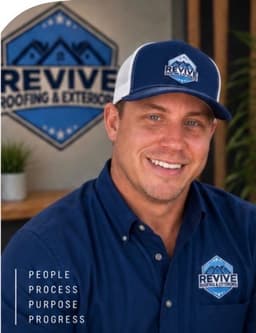
Blake Grissom
Founder & CEO, Revive Roofing & Exteriors · Co-Founder & CSO, BuilderLync • #1 Roofing Sales Rep in the Nation (2025) • Double Golden Door Award • Flagship Capital City Roofing Licensee
Blake Grissom is the Founder and CEO of Revive Roofing & Exteriors and the Co-Founder and Chief Sales Officer (CSO) of BuilderLync, bringing over 18 years of hands-on roofing and exterior restoration expertise to the Carolinas. In 2025, Blake ranked as the #1 roofing sales representative in the nation with over $7 million in personal sales and earned the Double Golden Door Award. Headquartered in Charleston, South Carolina and serving the Greenville Upstate, Revive operates as the flagship partner on the Capital City Roofing Licensing Platform. Under his leadership, Revive is the only Charleston roofing contractor offering three layers of warranty protection anchored by a $250,000 Workmanship Guarantee across residential, multi-family, and commercial roofing.