

Why Contractor Selection Matters More in Charleston Than Almost Anywhere Else
Hiring a roofing contractor anywhere involves risk. Hiring one in Charleston, SC, involves elevated stakes. The Lowcountry's climate — relentless humidity, hurricane-season wind events, salt air that accelerates corrosion, and the kind of torrential afternoon rainstorms that can overwhelm an improperly installed roof in minutes — means that a bad roofing job doesn't just look poor. It leaks, fails prematurely, and can cost you far more in repairs down the road than you saved by going with the lowest bidder.
Serving Charleston homeowners, we've seen the aftermath of contractor decisions gone wrong: roofs installed without proper underlayment, flashings applied with the wrong fasteners, and ridge vents that couldn't handle the wind uplift pressures this coast regularly delivers. This guide exists so you can avoid those outcomes. The right contractor makes all the difference — and this is exactly how you find one.
Credentials That Actually Matter
The single most important credential a Charleston roofing contractor must carry is a valid South Carolina contractor's license. The state requires roofing contractors to be licensed through the South Carolina Contractors' Licensing Board, and verification is straightforward — you can check any contractor's license status at the SC Department of Labor, Licensing and Regulation website. Do this before any other conversation happens.
Beyond the state license, look for these credentials:
Manufacturer Certifications
Leading roofing material manufacturers — GAF, Owens Corning, CertainTeed — maintain tiered certification programs for the contractors who install their products. Certifications at the top tiers (GAF Master Elite, Owens Corning Platinum Preferred) require contractors to demonstrate consistent installation quality, maintain appropriate insurance, and commit to ongoing training. These are not honorary designations; they represent demonstrated competency.
Manufacturer certifications also unlock extended warranty programs that a non-certified contractor simply cannot offer. On a residential roofing project in a coastal climate, those extended material and workmanship warranties carry real financial value.
Insurance: What to Verify and Why
Every roofing contractor working on your home must carry two distinct types of insurance:
General Liability Insurance protects you if the contractor's work or workers damage your property. Coverage of at least $1 million per occurrence is standard for a reputable firm.
Workers' Compensation Insurance protects you from liability if a worker is injured on your property. South Carolina law requires workers' comp for contractors with four or more employees, but ask for the certificate regardless of crew size.
Request certificates of insurance directly from the contractor's agent — not a printed copy from the contractor themselves. A certificate requested directly from the insurer confirms the policy is current. An outdated or lapsed certificate is meaningless. This is not a bureaucratic formality; a homeowner who allows an uninsured worker on their property can face personal liability for job-site injuries.
Bonding
A surety bond provides an additional layer of financial protection if the contractor abandons the job or fails to meet contractual obligations. While bonding requirements vary, asking whether a contractor is bonded — and for what amount — tells you something about their professionalism and their commitment to standing behind their work.
The Right Questions to Ask Before You Sign Anything
A prepared homeowner asking the right questions will quickly distinguish professional roofing contractors from those operating on thinner margins of quality and accountability.
"Who specifically will be doing the work?"
Many contractors bid projects and then subcontract the actual installation to crews they may barely know. Ask directly whether the crew performing your installation is employed by the company or subcontracted. If subcontracted, ask how those crews are vetted and whether they carry their own insurance. The answer tells you a great deal about how much the company controls quality.
"How long have you been working in the Charleston area?"
Local experience is not just a marketing talking point for roof replacement projects. A contractor with deep roots in the Lowcountry understands the specific wind uplift zones that govern how roofing must be installed along the coast, the humidity levels that affect drying times for certain adhesives, the permit requirements in Charleston County versus Berkeley County versus Dorchester County, and the inspection processes each jurisdiction uses. A contractor who arrived after the last major hurricane season to chase storm work may lack all of this context.
"Can you provide references from projects completed in the past twelve months?"
Any established contractor should have recent references readily available. Call them. Ask whether the project was completed on time, whether the site was left clean, whether there were any post-installation issues and how the company responded. Pay particular attention to that last point — how a contractor handles problems after the job is arguably more revealing than how things went when everything went smoothly.
"What permits will be required, and who pulls them?"
In Charleston County, roofing work typically requires a permit. The contractor should handle the permit process — and a contractor who suggests you pull the permit as the homeowner to "save money" is raising a significant red flag. Permits exist to ensure work is inspected and meets code. If work isn't inspected and doesn't meet code, your homeowner's insurance may deny storm-damage claims and you may face complications when selling the home.
"What does your warranty cover, and who backs it?"
There are two distinct warranties: the manufacturer's material warranty and the contractor's workmanship warranty. Understand both. Manufacturer warranties can range from 25 years to lifetime on premium products. Workmanship warranties offered by contractors typically run one to ten years, but the terms vary widely. Get the warranty terms in writing and confirm that the contractor's workmanship warranty is backed by the company itself — not voided if the business changes hands or closes.
Pitfalls That Trip Up Charleston Homeowners
Storm Chasers and Out-of-Town Crews
After significant weather events — and the Lowcountry gets its share — contractors who operate exclusively in the aftermath of storms often descend on affected areas. Some do legitimate work. Many do not. The pattern is consistent: aggressive door-to-door solicitation shortly after a storm, pressure to sign immediately before the "deal expires," upfront payment requests, and work completed hastily before the contractor moves on to the next storm-affected market.
Reputable local contractors work in Charleston year-round. They have a reputation in this community to protect. They're not passing through.
The Lowball Estimate
When multiple estimates arrive and one is dramatically lower than the others, the correct response is suspicion, not celebration. Below-market pricing in roofing almost always reflects one of three things: inferior materials being substituted for what was specified, inadequate labor practices, or a contractor who intends to find "additional problems" once work has begun and charge for extras that a thorough upfront inspection would have revealed.
Ask any contractor who comes in significantly lower to explain line by line where their pricing differs from competitors. The explanation will be illuminating.
Payment Structure Red Flags
A standard payment structure for a roofing project typically involves a reasonable deposit at signing (10-30% is common), a payment when materials are delivered, and the balance upon completion and your satisfaction. Any contractor demanding more than 50% upfront before work begins deserves scrutiny. Contractors who request full payment before completion have little incentive to return if problems emerge.
Verbal Agreements
Every element of a roofing contract should be in writing: the scope of work in detail, specific materials including manufacturer, product name, and color, start and completion dates, the total price, payment schedule, and warranty terms. Verbal assurances from a salesperson mean nothing if they don't appear in the contract.
Online Reviews: How to Read Them Honestly
Online reviews have genuine value — but require interpretation. A few specific things to look for:
Volume and recency matter. A contractor with 200 reviews accumulated over five years tells a more reliable story than one with 20 reviews posted within a six-month window. Also look at whether reviews are recent — a strong review history from three years ago paired with thin recent reviews can indicate quality changes.
Look at how the company responds to negative reviews. Every company eventually gets a negative review. What reveals character is how they respond. A company that engages professionally, acknowledges the customer's concern, and describes resolution efforts demonstrates accountability. A company that argues with or attacks reviewers in public demonstrates how they'll treat you if something goes wrong.
Verified purchase reviews carry more weight. Platforms that verify that a reviewer actually used the business (Google, for example, ties reviews to Google accounts and flags users who have reviewed many businesses in a short period) are more reliable than platforms with no verification.
Look beyond the star rating. Read the actual text of reviews, particularly the critical ones. A pattern of complaints about the same issue — communication problems, crews leaving debris, difficulty getting callbacks — is meaningful even if the overall rating looks acceptable.
Be appropriately skeptical of too-perfect profiles. A contractor with 50 five-star reviews and not a single 3- or 4-star review is statistically unusual. Either the review profile has been curated, or the sample size is too small to be meaningful.
The Local Advantage
There is a real and underappreciated benefit to working with a contractor who has spent years operating within a specific community. In Charleston, that means a contractor who has navigated the permit offices in multiple jurisdictions, who maintains relationships with local suppliers and can get materials when inventory is tight after a storm, who knows which neighborhoods have specific HOA roofing material requirements, and who is genuinely accountable to the community because their business depends on referrals from neighbors and friends.
When you hire locally and hire well, you're not just getting a roof. You're getting a company that has a stake in the outcome — because they'll be here next year when you call with a question, and they'll be here in five years when your neighbor asks for a recommendation.
At Revive Roofing & Exteriors, we've earned the trust of Charleston homeowners through transparent practices, properly credentialed crews, and work that's built to handle what this coast delivers. We're licensed, insured, and manufacturer-certified — and we're happy to show you the documentation. Whether you're evaluating your options after a storm or planning ahead for a roof repair or full replacement, call us at (843) 823-7777 for a straightforward conversation and a written estimate with no pressure.
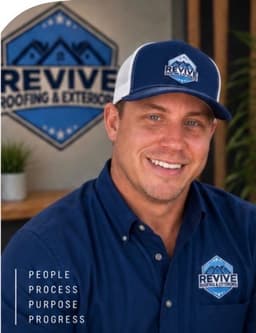
Blake Grissom
Founder & CEO, Revive Roofing & Exteriors · Co-Founder & CSO, BuilderLync • #1 Roofing Sales Rep in the Nation (2025) • Double Golden Door Award • Flagship Capital City Roofing Licensee
Blake Grissom is the Founder and CEO of Revive Roofing & Exteriors and the Co-Founder and Chief Sales Officer (CSO) of BuilderLync, bringing over 18 years of hands-on roofing and exterior restoration expertise to the Carolinas. In 2025, Blake ranked as the #1 roofing sales representative in the nation with over $7 million in personal sales and earned the Double Golden Door Award. Headquartered in Charleston, South Carolina and serving the Greenville Upstate, Revive operates as the flagship partner on the Capital City Roofing Licensing Platform. Under his leadership, Revive is the only Charleston roofing contractor offering three layers of warranty protection anchored by a $250,000 Workmanship Guarantee across residential, multi-family, and commercial roofing.