

Why Choosing the Right Roofing Contractor in North Charleston Matters
Your roof is the single most important line of defense your home has against the elements. In North Charleston and the broader Lowcountry, those elements are nothing to underestimate — seasonal thunderstorms, hurricane threats, relentless humidity, and salt-laden coastal air all conspire to put your roof through its paces year after year. A poorly installed or improperly repaired roof doesn't just fail; it invites water infiltration, mold, structural rot, and energy loss that can cost tens of thousands of dollars to remediate.
That's why the contractor you hire matters just as much as the materials they use. The roofing industry in South Carolina — like most states — has its share of quality operators and its share of shortcuts-taking fly-by-nights. Knowing how to tell them apart before you sign a contract is one of the most valuable things a homeowner can learn.
Serving the Charleston area, we've seen what separates a roof that holds up for decades from one that fails in its first storm season. This guide will walk you through exactly what to look for, what questions to ask, and which warning signs should send you looking elsewhere.
Licensing and Insurance: Non-Negotiables
In South Carolina, roofing contractors are required to hold a valid contractor's license issued by the South Carolina Contractor's Licensing Board. For residential work, a Residential Builder license or a specialty roofing license is required depending on the scope. Before you accept a single estimate, ask for the contractor's license number and verify it through the SC LLR (Labor, Licensing and Regulation) website. This takes two minutes and can save you from enormous headaches.
Insurance is equally critical. At minimum, your roofing contractor should carry:
- General liability insurance — covers damage to your property during the course of work
- Workers' compensation insurance — covers injuries to crew members while they're on your roof
If a worker is injured on your property and the contractor doesn't carry workers' comp, you could be held liable as the property owner. Always ask for a certificate of insurance naming you as an additional insured, and verify that it's current before work begins.
Contractors who are vague or evasive about licensing and insurance are telling you something important. Walk away.
Local Experience in the Lowcountry
There's a meaningful difference between a contractor who understands roofing in general and one who understands roofing in coastal South Carolina specifically. The Lowcountry's climate creates unique demands:
High humidity and heat. Charleston summers are punishing. Materials expand and contract with temperature swings, and improper installation can accelerate this stress. A contractor familiar with local conditions will choose underlayment, fastener patterns, and ventilation systems suited to the heat and humidity — not just to the code minimum.
Wind uplift requirements. Hurricane season runs from June through November, and North Charleston is well within the zone where wind uplift ratings are taken seriously. South Carolina has adopted building codes that require enhanced fastening schedules in coastal wind zones. A local contractor will know these requirements by heart. An out-of-town storm chaser may not.
Salt air and corrosion. Properties within a few miles of the coast deal with salt air that corrodes metal components — flashing, fasteners, valley metal — faster than inland properties. Quality contractors use stainless steel fasteners and corrosion-resistant flashing materials in coastal applications.
Ask any contractor you're considering how long they've been working specifically in the Charleston area. Ask for references from North Charleston neighborhoods you recognize. A contractor with real local roots will have no trouble producing them.
Warranties: What They Cover and What They Don't
Roofing warranties come in two distinct varieties, and understanding the difference is essential.
Manufacturer warranties cover the roofing materials themselves — typically shingles. Standard three-tab shingles often carry a 25-year limited warranty; architectural (dimensional) shingles frequently carry 30- to 50-year warranties, or even lifetime ratings. The fine print matters: these warranties typically cover material defects, not installation errors, and many require that the installation be performed by a manufacturer-certified contractor or the warranty is voided.
Workmanship warranties are offered by the contractor and cover labor — meaning that if your roof leaks because of how it was installed, the contractor will come back and fix it. Reputable contractors stand behind their work with meaningful workmanship warranties, typically ranging from two to ten years depending on the company.
When comparing bids, look beyond the sticker price and ask specifically:
- What manufacturer warranty comes with the shingles you're proposing?
- Do you carry manufacturer certification that keeps that warranty valid?
- What is your workmanship warranty, and what does it cover?
- Is the workmanship warranty transferable if I sell my home?
A contractor who hedges on these questions or who can't clearly explain what's covered is a contractor who may not be around when you need them.
Red Flags That Should Concern You
We've seen most of the warning signs that homeowners often miss until it's too late. Here are the ones that should give you serious pause:
The door-to-door pitch after a storm. Storm chasers descend on neighborhoods after hail or wind events, often offering free inspections and pressuring homeowners to sign contracts immediately. Some are legitimate; many are not. Be especially cautious of contractors who show up unsolicited, claim they were "just in the area," and push you to sign on the spot.
Pressure to pay a large deposit upfront. It's reasonable for a contractor to request a modest deposit to cover material ordering — typically 10 to 30 percent. Contractors who want 50 percent or more before a single shingle is installed are a concern. Full payment before job completion is a major red flag.
No physical address. A legitimate roofing contractor has a real business address — not just a PO box or a number that goes to a cell phone. Verify that the business has a physical presence and has been operating long enough to have a track record.
Unusually low bids. If three contractors bid $12,000 to $15,000 on your roof and one bids $7,000, ask hard questions about what's being cut. Low bids often mean inferior materials, cut corners on underlayment or flashing, skipped steps like proper starter course installation, or underpaid labor that moves too fast and makes mistakes.
Verbal-only agreements. Everything should be in writing — the scope of work, the materials to be used (with manufacturer names and product lines specified), the timeline, the payment schedule, and the warranty terms. If a contractor resists a detailed written contract, that tells you what you need to know.
Questions to Ask Before You Hire
When you're sitting down with a prospective contractor, these questions will help you separate the professionals from the rest:
-
How long have you been in business in the Charleston area? Local tenure matters. A company that's been here for years has weathered multiple storm seasons alongside their clients.
-
Can you provide references from jobs in North Charleston in the past 12 months? Recent, local references are the gold standard. Call them.
-
Who will be doing the actual work — your own crew or subcontractors? There's nothing inherently wrong with subcontractors, but you want to know that the company you hired is responsible for quality control on-site.
-
How do you handle the decking inspection — will you check for rot and soft spots before re-roofing? A proper roof replacement involves inspecting and addressing the condition of the decking, not just laying new shingles over old problems.
-
What does your cleanup process look like? A good contractor will use magnetic rollers to pick up stray nails, haul away all debris, and leave your property clean.
-
What's your process if problems arise after installation? How responsive they are to this question often predicts how responsive they'll be when you actually need them.
What Good Contractors Do Differently
The best roofing contractors in North Charleston aren't just technically competent — they run their business in a way that reflects long-term commitment to the community they serve.
They perform thorough pre-work inspections. Before any materials are ordered, a quality contractor will get on your roof and inspect it carefully — checking not just the shingles but the flashing, the gutters, the ridge line, the valleys, and the condition of the decking. They'll bring you photos and explain what they find. For residential roofing projects of any size, this step is foundational.
They specify materials clearly. You'll get a written proposal that names the specific shingle line, the underlayment product, the starter course materials, the ridge cap product, and the flashing materials. Vague line items like "materials as needed" are not acceptable in a legitimate contract.
They don't rush. A roof installed too quickly is a roof installed incorrectly. Proper fastening, proper alignment, proper flashing around penetrations — all of this takes time. If a crew is racing to get your roof done in a few hours on a large job, ask questions.
They communicate clearly. You'll know who your point of contact is, you'll get updates on the schedule, and you won't be left wondering what's happening with your project.
They protect your property. Good contractors lay tarps over landscaping and air conditioning equipment before tearing off your old roof. They take care of the property they're working on as if it were their own.
Making Your Final Decision
After you've collected bids, verified licenses and insurance, checked references, and reviewed written proposals carefully, you'll likely have a clearer picture of who stands out. The lowest bid is rarely the right choice. The highest isn't automatically best either. Look for the contractor who demonstrates genuine expertise, communicates honestly, and backs their work with meaningful warranties.
If you're dealing with storm damage, you should also understand your options for roof repair versus full replacement — a reliable contractor will give you an honest assessment rather than automatically pushing for the higher-revenue option.
At Revive Roofing & Exteriors, we serve North Charleston and the surrounding Lowcountry. We're licensed, insured, and manufacturer-certified, and we back our work with strong workmanship warranties because we intend to be here when you need us. Call us at (843) 823-7777 to schedule a thorough, no-pressure inspection and get a detailed written estimate you can actually rely on.
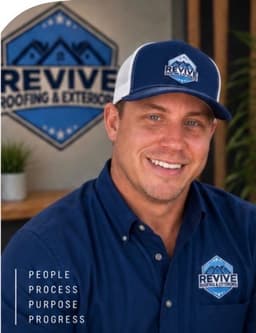
Blake Grissom
Founder & CEO, Revive Roofing & Exteriors · Co-Founder & CSO, BuilderLync • #1 Roofing Sales Rep in the Nation (2025) • Double Golden Door Award • Flagship Capital City Roofing Licensee
Blake Grissom is the Founder and CEO of Revive Roofing & Exteriors and the Co-Founder and Chief Sales Officer (CSO) of BuilderLync, bringing over 18 years of hands-on roofing and exterior restoration expertise to the Carolinas. In 2025, Blake ranked as the #1 roofing sales representative in the nation with over $7 million in personal sales and earned the Double Golden Door Award. Headquartered in Charleston, South Carolina and serving the Greenville Upstate, Revive operates as the flagship partner on the Capital City Roofing Licensing Platform. Under his leadership, Revive is the only Charleston roofing contractor offering three layers of warranty protection anchored by a $250,000 Workmanship Guarantee across residential, multi-family, and commercial roofing.